How Does Oral Naguage Help Wtih Reading
Potent oral language skills form the foundation of literacy and academic success. A solid foundation of oral language helps children become successful readers and strong communicators. These skills also foster a child's confidence and overall sense of wellbeing.
The ability to apply oral language finer impacts all areas of a child's life; from their ability to learn in the classroom, their relationships with others, and their academic achievement; to their sense of self. There is evidence reporting that reduced oral language competence can lead to mental health problems, such as depression and anxiety, which may persist into adulthood.
So how can educators back up children to develop strong oral language and vocabulary skills?
The Need for a High-Quality Language Environment
The development of these skills requires a rich language environment which in plough creates a high-quality learning environment. A rich linguistic communication surround is one in which there are regular and varied language experiences including multiple opportunities to:
- listen to a range of quality children'south moving-picture show books
- asking & answering questions
- talk nearly experiences
- storytelling & retells
Hart and Risley'southward (1995) research showed a strong correlation betwixt the number of words a child is exposed to and the size of the vocabulary they develop:
- 3-year-old children who heard over 2,000 words an hour had vocabularies of approximately 1,116 words.
- A iii-year-sometime child who heard just 600 words per 60 minutes had vocabularies of only 525 words.
Withal, information technology is not just the quantity of linguistic communication merely also the quality of language a kid is exposed to that matters.
The Principles of Creating a Rich Language Environment in the Abode
- Children learn what they hear: repeated exposure to words, books and chat allows a child to acquire new words and develop strong oral linguistic communication skills.
- Children learn words for things and events that interest them: rather than trying to divert a kid's attention, talk about what they are looking at and what they evidence an involvement in. Children will larn more when they are interested than when they are drilled.
- Children learn best when they are engaged and interacting: talk with a child rather than at them, expand on what the child says, comment on what the child is interested in and ask lots of questions.
- Children learn best in meaningful contexts: playing with a child and engaging with them facilitates greater learning opportunities than direct teaching. For case, while playing with blocks an adult can model spatial linguistic communication such equally "Put the block backside the green cake." Or education math linguistic communication during play with toy animals such as "Which one is bigger? How many sheep are at that place? Let'due south make the same number of chickens in each pen."
- Children need to hear a wide range of examples of words and language structures: quality is important, not just quantity. Talk with children about lots of topics, read a broad range of books and sing lots of songs and rhymes.
Home and School Working Together to Foster a Rich Language Environment
Dwelling
Repeated exposure to a rich language surround results in successful communicators, readers and writers. In order to set children for school, parents need to empathise the importance of oral language and be encouraged to communicate with and read to their child from a very early age. For more information on how parents tin fix their children for school, keep an eye out for the third installment in our Oral Linguistic communication serial this term Giving children the all-time beginning for literacy (speaking and listening skills).
School
With schools under force per unit area to produce results in literacy, children are being introduced to reading and writing in the Early on Years and Foundation. However all the research indicates that without a stiff foundation in oral language skills, children volition non develop competency in reading and writing. Many children are missing out on important oral linguistic communication skills and schools would be wise to incorporate a systematic approach to teaching oral language skills in these foundation years. See our Whole Schoolhouse Literacy Plan for a total telescopic and sequence. This document outlines a whole school program for the explicit and systematic targeting of oral language.
In Conclusion
There is a significant link betwixt higher levels of oral language skills and written language. PLD's approach to literacy is based on the understanding that a child'southward vocabulary, sentence structure, comprehension and power to procedure verbal instructions and communicate thoughts and ideas are directly linked to overall bookish outcomes. PLD believes most children require home and school to work together to help children maximise their potential. Schools are in an excellent position to provide quality information to the families within their community and provide support for students to develop potent oral language skills. For more information on how schools can support oral language development, see the second installment in our oral linguistic communication serial Improving Oral Language.
-

Comprehension Questions for 3 Year Olds
From $65.00 $65.00 incl. GST
-
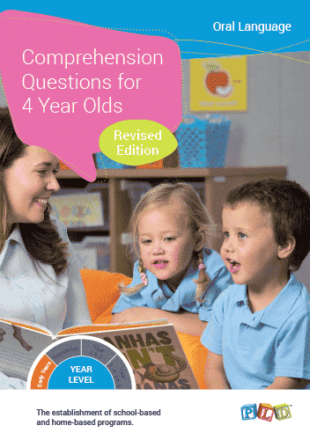
Comprehension Questions for 4 Year Olds
From $65.00 $65.00 incl. GST
-
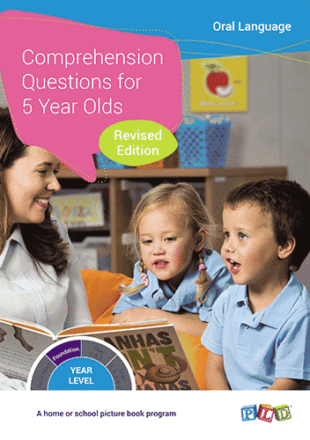
Comprehension Questions for five Year Olds
From $65.00 $65.00 incl. GST
-
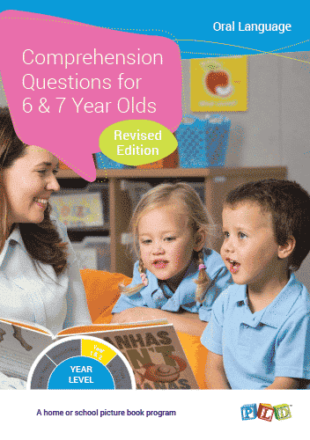
Comprehension Questions for 6 and 7 Twelvemonth Olds
From $65.00 $65.00 incl. GST
-

Comprehension Questions for eight and 9 Year Olds
From $65.00 $65.00 incl. GST
Further Readings
- Improving Oral Language
- Giving Children the Best Start for Literacy
Source: https://pld-literacy.org/the-importance-of-strong-oral-language-vocabulary-skills-for-later-literacy-success/
0 Response to "How Does Oral Naguage Help Wtih Reading"
Post a Comment